There are things that happen in the vineyard that often go unnoticed
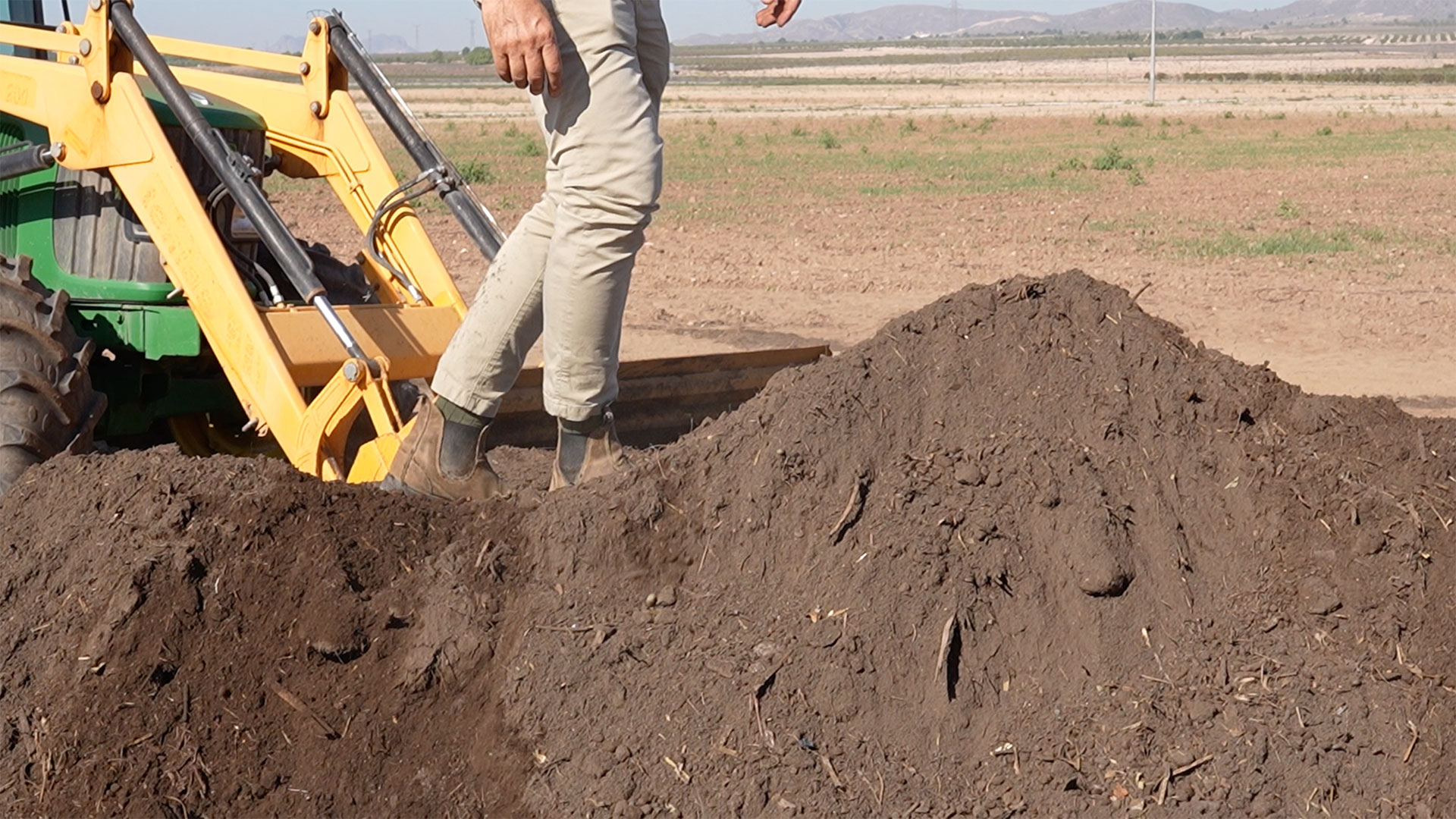
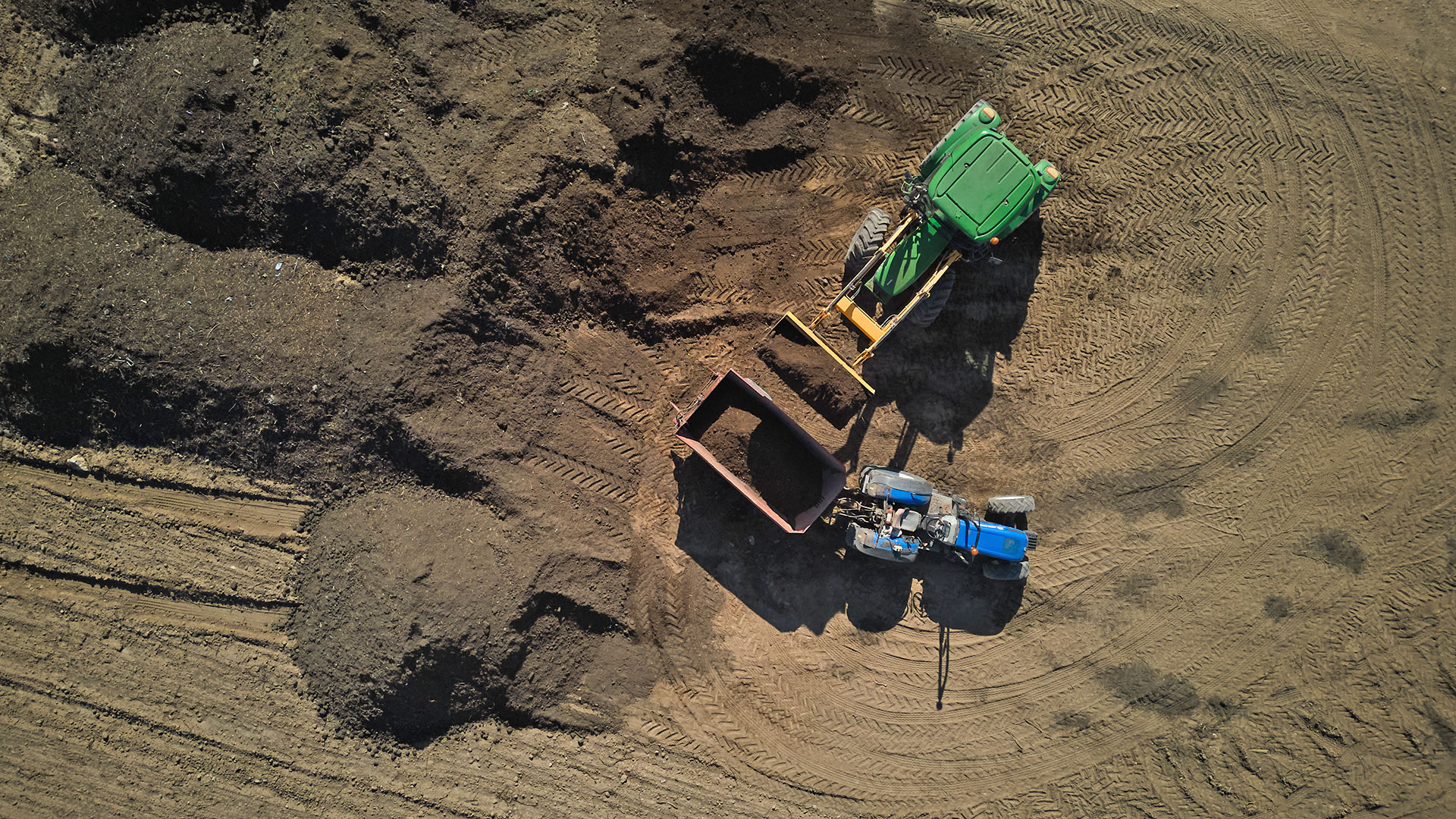
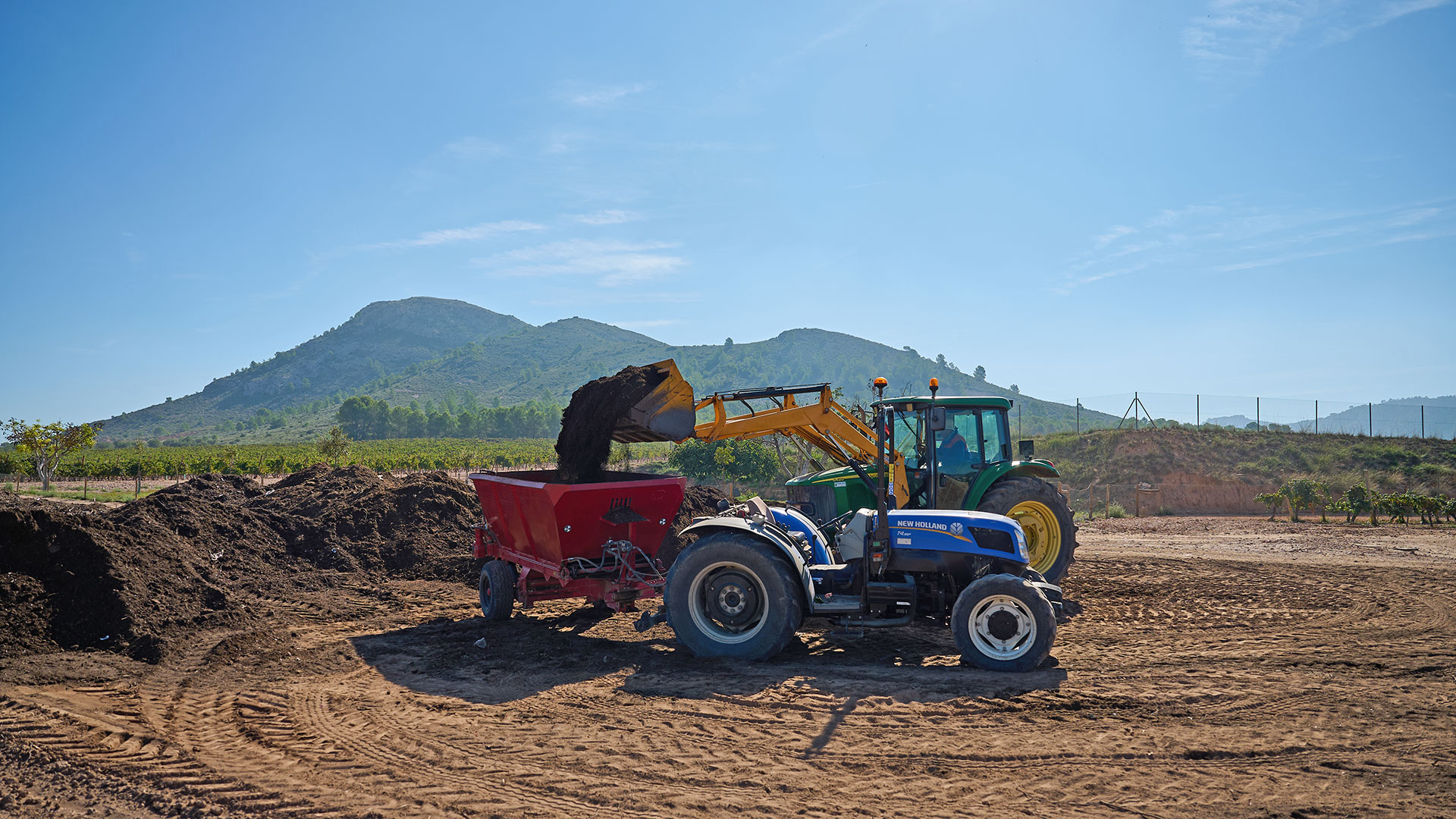
One of them is taking place these days, among tractors, piles of manure and many hours of work. We are fertilising our vineyards. And although from the outside it may simply look like spreading manure on the ground, for us, it means much more than that.
It is a way of caring for one of the foundations of our approach to viticulture: the soil.
Since we began our journey towards organic farming in 2021, we have gradually incorporated manure from extensive livestock farming as part of our vineyard management. We are not simply looking to provide nutrients to the plants. We are aiming for something that goes much further: improving the soil structure and bringing it back to life.
The soil needs time too
The plant can absorb nutrients relatively quickly. The soil, on the other hand, works at a different pace.
Improving its structure is not a matter of one season. It can take years, or even decades. That is why, when we look back and see how our soils have evolved since we began working organically, the change is especially significant.
Every addition of organic matter makes a difference.
Manure provides nutrients for the plants, but it also helps improve the structure of the soil, its ability to retain water and the conditions in which the roots develop.
That is fundamental for us. Because before thinking about the grapes, we need to think about where they grow.
Not just any manure will do
In organic farming, it is also important to know the origin of what we add to the soil.
We use sheep manure from extensive livestock farming, certified by the Regional Committee for Organic Agriculture.
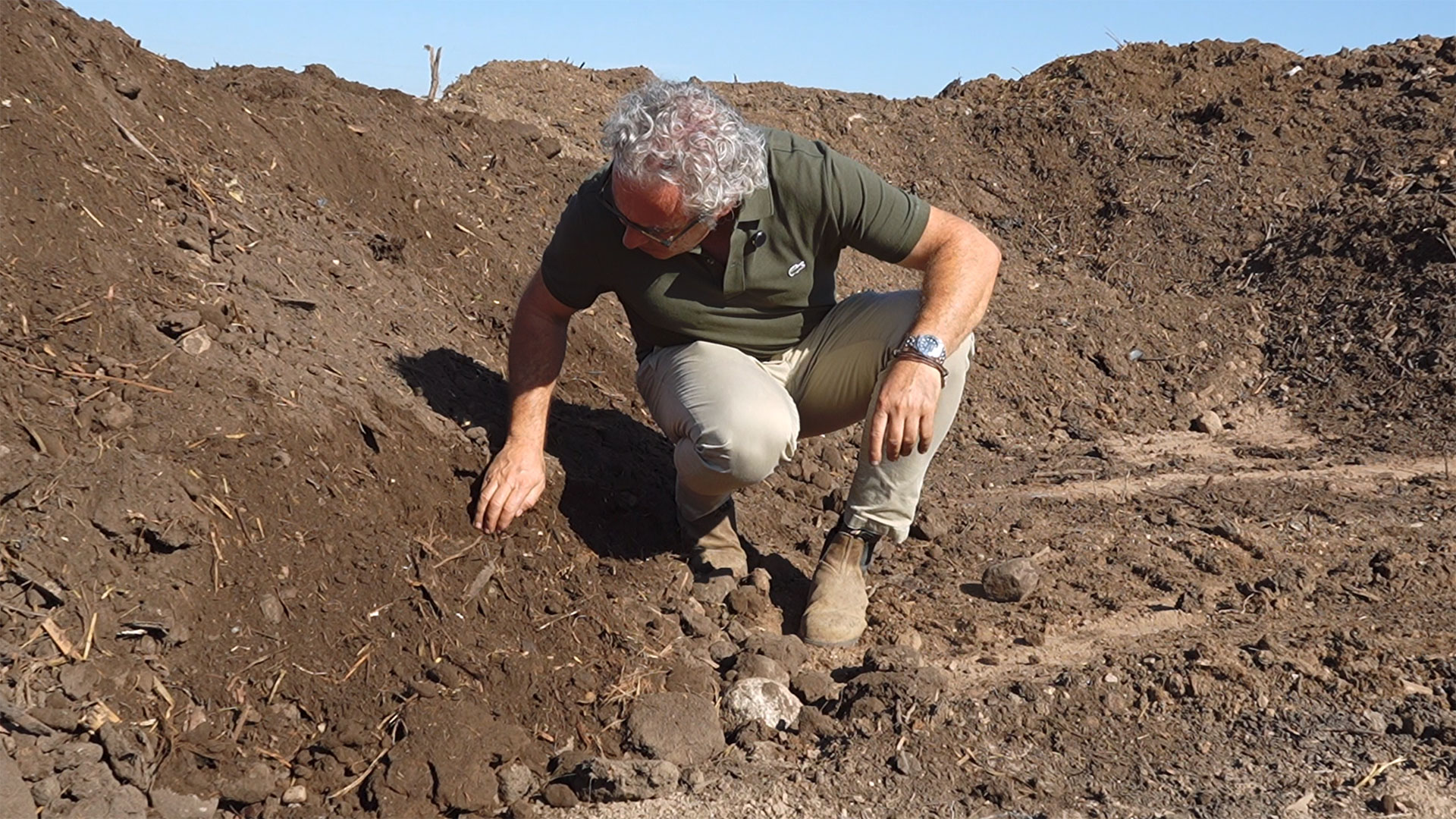
It contains animal manure mixed with straw, which is used as bedding for the animals. The straw helps retain moisture and, together with the manure, forms organic matter that must reach the vineyard already fermented.
Because there is another important word here: time.
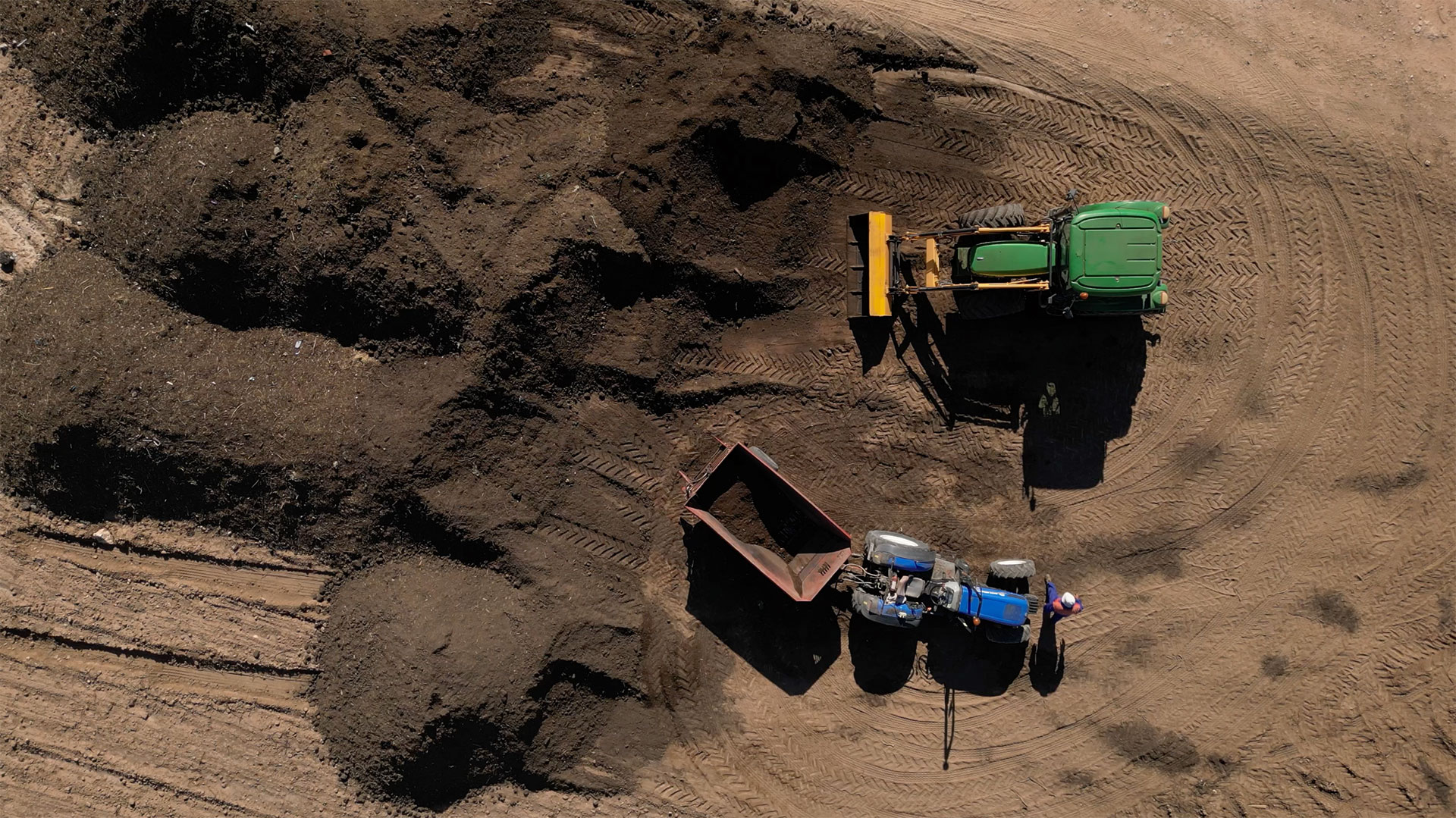
Before it reaches the soil, the manure needs to go through its own fermentation process. Only then is it ready to be incorporated into the vineyard and continue its work there.
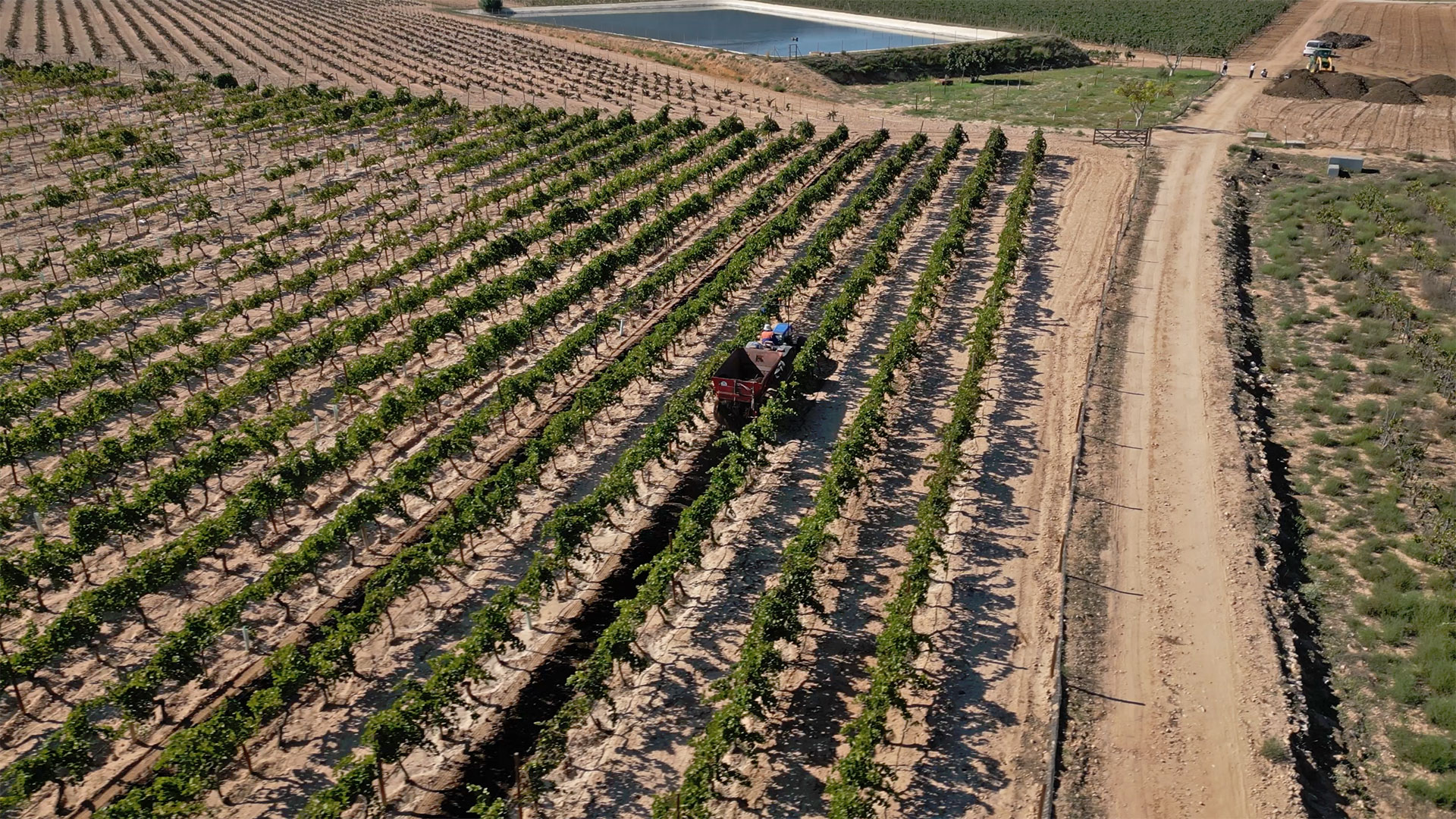
And now, it’s time to spread it across the vineyard
There are different ways of incorporating manure into the soil. One of them is using a subsoiler tine, introducing it directly into the ground.
We prefer another method: surface spreading.
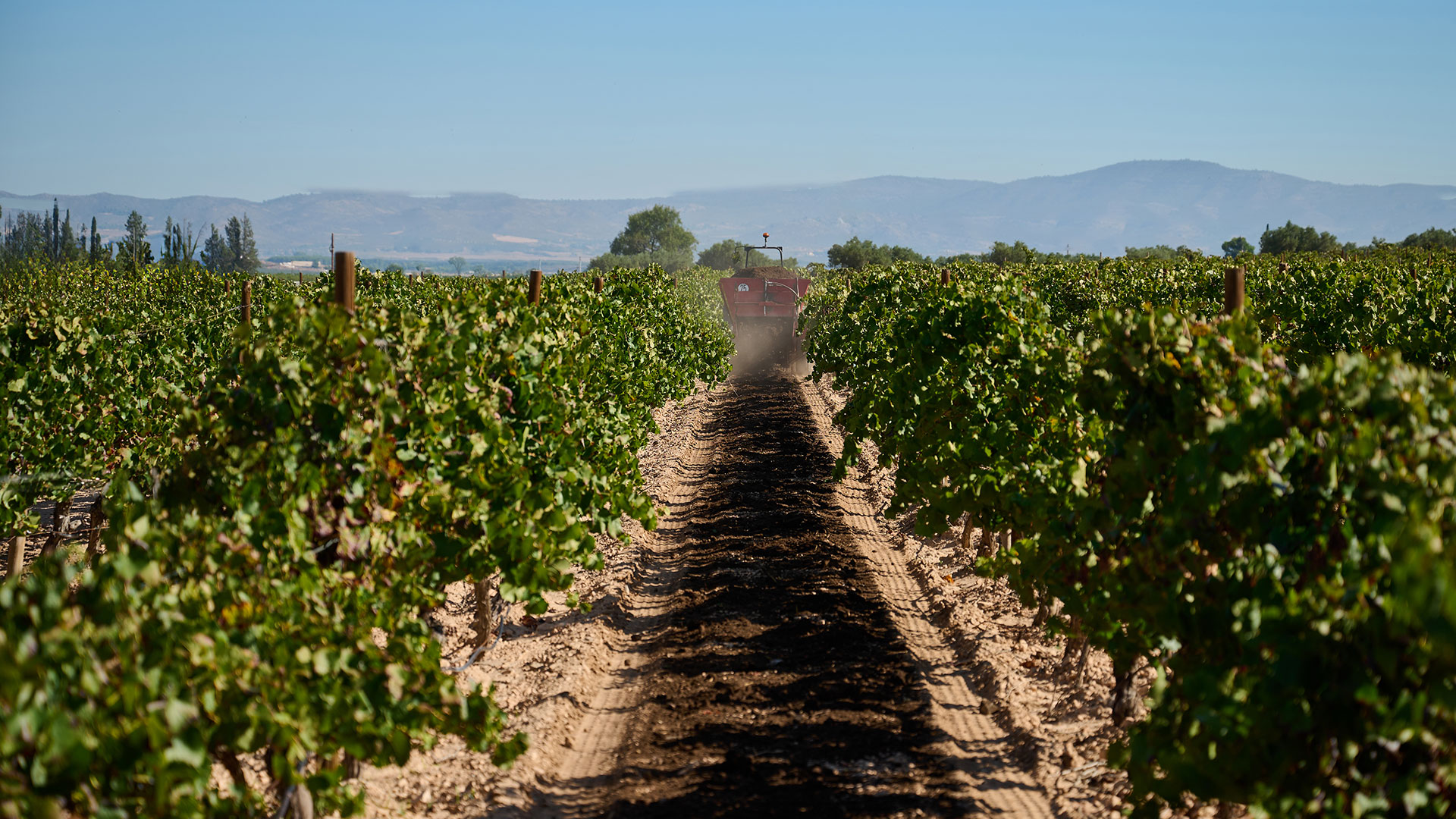
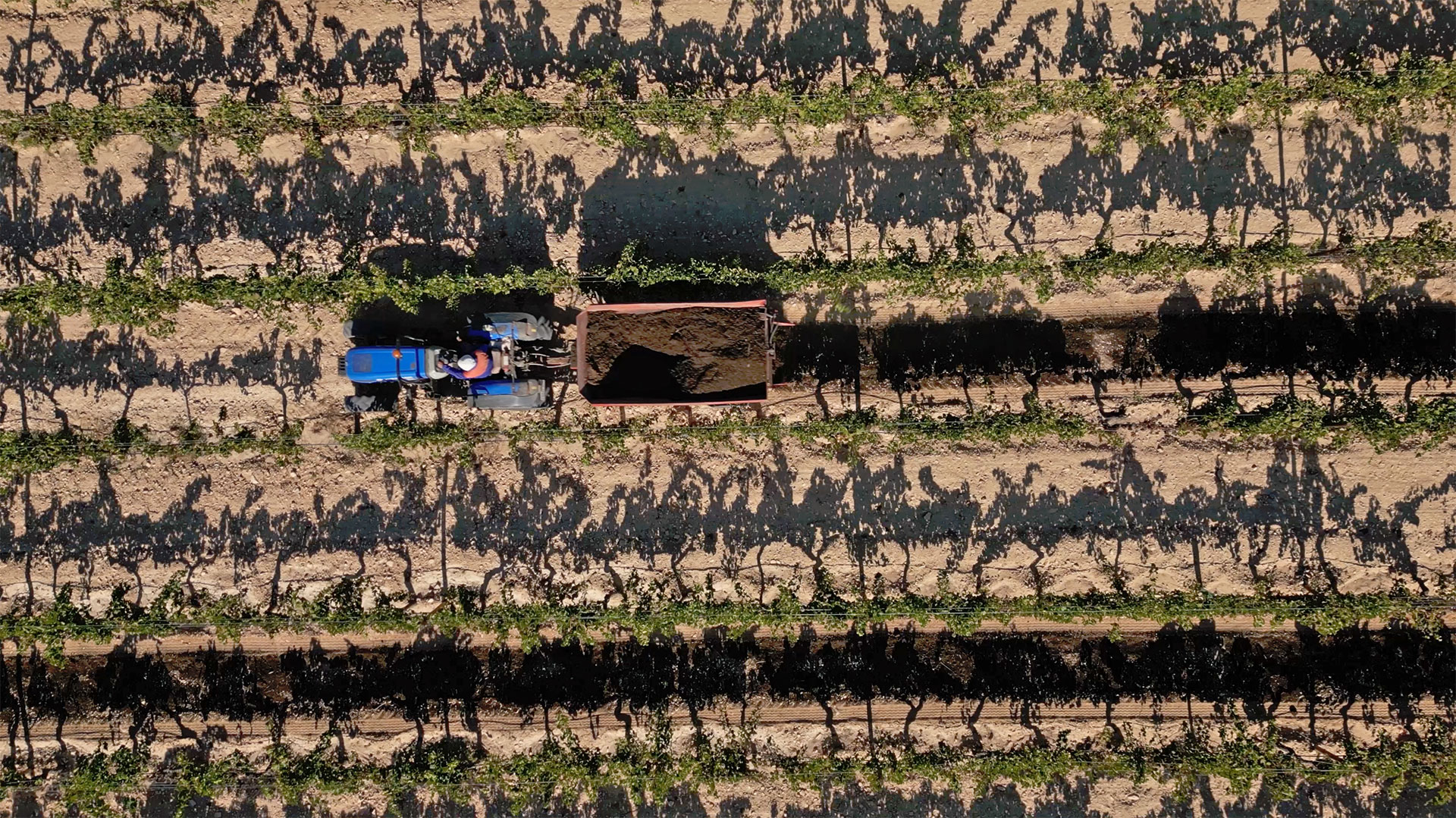
This way, the manure is distributed across the entire row rather than concentrated in one specific area. It is then incorporated into the soil, allowing the organic matter to reach a wider surface area and giving the plants’ root zone a little more room to develop.
It may seem like a simple task: load, spread, incorporate.
But there is much more behind it.
There is planning, hard work and, above all, a way of understanding the vineyard that looks beyond the next harvest.
What we put into the soil today will make a difference in the vineyard tomorrow
Perhaps this is one of those tasks that does not produce immediate results.
But every time we add organic matter, we are working towards something we consider essential: healthier, more balanced soils that can continue to support our vines for many years to come.
And that is also part of making wine.
Because caring for a vineyard is not just about looking after its leaves, bunches or roots. It is also about caring for what we cannot see, but what makes everything else possible.
Small actions that, over time, help build the soil on which our vineyard will continue to grow.
Because, in the end, fertilising the vineyard is also a way of nurturing it.